You’ve made the smart investment in a professionally installed solar system—one designed to power your home for decades and boost your energy independence. Now, how do you ensure it continues to perform at its peak for the next 25 years? This guide is your answer.
Whether checking your system’s app over morning coffee or cleaning panels after a dusty week, learning how to monitor, maintain, and troubleshoot your solar array uniquely empowers you to protect your investment and stretch its value. By understanding your system’s daily rhythms, the warning signs of common issues, and when to seek professional help, you step confidently into the role of a proactive solar owner.
Key Takeaways
- Monitor energy production daily through your system’s app to catch performance drops early.
- Soiling losses from dust and debris can reduce system efficiency by 3-10% annually.
- Most inverter error codes indicate specific issues that help diagnose problems before calling professionals.
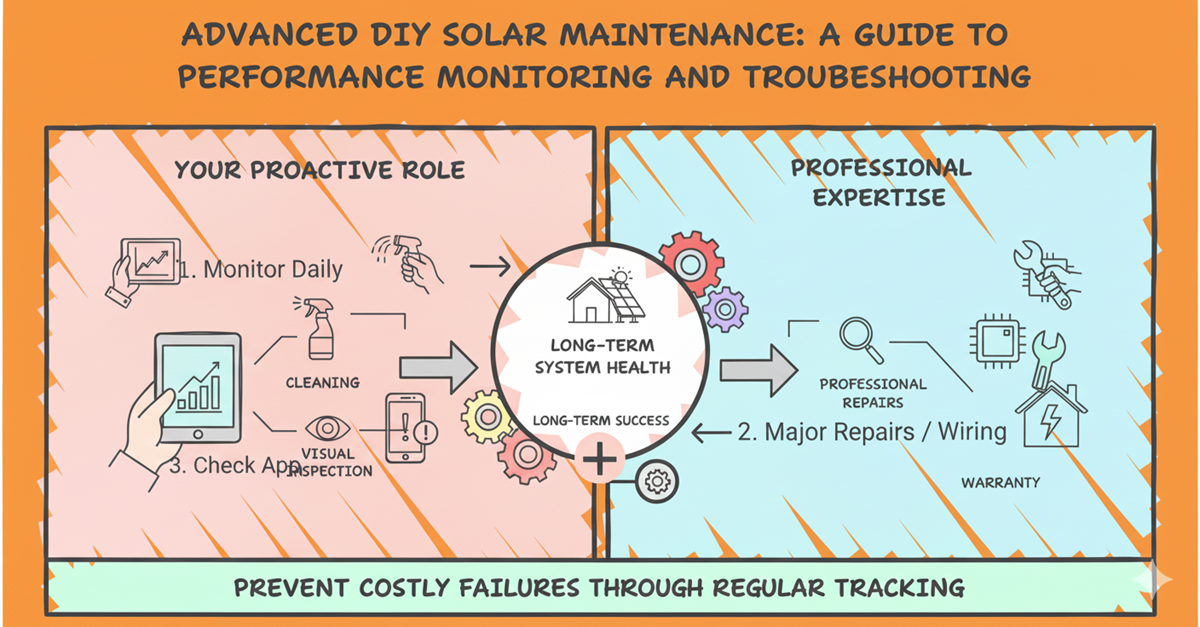
- DIY maintenance should focus on monitoring and cleaning while leaving electrical work to certified technicians.
- Regular performance tracking prevents small issues from becoming costly system failures.
How Do Solar Monitoring Systems Provide System Health Insights?
Modern solar monitoring systems serve as your system’s health dashboard, collecting and analyzing performance data to help you maximize your investment returns. These platforms transform complex electrical measurements into user-friendly insights that reveal how efficiently your system operates under various conditions.
Most systems update data every 15 seconds to 2 minutes, providing near real-time visibility into your system’s operation. This constant data flow enables you to spot performance anomalies quickly and address issues before they impact your energy savings significantly.
Popular monitoring platforms include Enphase MyEnlighten, SolarEdge, SMA Sunny Portal, and Tesla’s monitoring app. Each platform offers unique features, but all provide core functionality like production tracking, historical analysis, and alert notifications. Enphase MyEnlighten excels at individual panel monitoring, while SolarEdge offers comprehensive system overviews with per-panel performance data.
Your monitoring setup typically includes multiple components working together. Solar inverters serve as the central data collection hub, while energy meters measure electricity flow between your system, home, and grid. Environmental sensors track factors like temperature and sunlight intensity that influence solar output, providing context for performance variations.
What Key Performance Metrics Should You Monitor Daily?
Energy production remains the primary metric for assessing your system’s health. Track both instantaneous power generation and cumulative daily kilowatt-hour (kWh) production to establish baseline performance patterns. Sudden drops in production on sunny days indicate potential issues requiring investigation, while gradual declines may signal normal aging or accumulated soiling.
A performance ratio calculation compares your system’s actual output to its theoretical maximum under current conditions. This metric accounts for variables like shading, temperature effects, and system losses, providing a more accurate picture of operational efficiency than raw production numbers alone. A declining performance ratio often indicates maintenance needs or component degradation.
System efficiency tracking reveals how effectively your panels convert available sunlight into usable electricity. Monitor efficiency trends over time to identify when cleaning becomes necessary or when individual panels begin underperforming. Environmental factors like temperature, humidity, and air quality significantly impact efficiency and should be considered when evaluating performance data.
How Can You Identify and Understand Soiling Losses?
Soiling represents the single most influential factor affecting solar system yield after irradiance, causing 3-5% average annual energy losses globally. Understanding soiling patterns in your specific location helps optimize cleaning schedules and maintain peak system performance throughout the year.
Dust, pollen, bird droppings, and other contaminants accumulate on panel surfaces, blocking sunlight from reaching photovoltaic cells. The impact varies dramatically by geographic location, with arid regions experiencing significantly higher soiling rates than areas with regular rainfall. Desert installations may see losses exceeding 10% annually, while regions with frequent precipitation maintain naturally cleaner panels.
Soiling losses follow predictable patterns based on local environmental conditions. Dry seasons typically show accelerated soiling accumulation, while rainy periods provide natural cleaning that resets the accumulation process. Tracking these seasonal patterns through your monitoring system helps establish optimal cleaning intervals for your specific location and conditions.
How Do You Calculate Soiling Impact on System Performance?
The soiling ratio quantifies performance degradation by comparing energy production under soiled conditions to clean panel output. A soiling ratio of 0.95 indicates a 5% energy loss due to accumulated dirt and debris. This metric provides an objective measurement of cleaning needs rather than relying solely on visual assessment of panel cleanliness.
Monitor production trends over extended periods to identify soiling accumulation patterns. Clean panels typically show consistent production under similar weather conditions, while gradually declining output despite good sunlight indicates a growing soiling impact. This data-driven approach ensures cleaning efforts focus on actual performance impact rather than cosmetic appearance.
Weather correlation analysis helps distinguish between soiling losses and other performance factors. Compare production drops with local weather data, including precipitation, wind patterns, and dust storm activity. Understanding these relationships enables more accurate soiling loss calculations and better maintenance planning.
What Do Common Solar Inverter Error Codes Mean?
Solar inverter error codes provide diagnostic information that helps identify specific system problems before they cause major failures. Understanding these codes enables appropriate initial troubleshooting and helps determine whether professional intervention is necessary. Most codes indicate precise issues within the electrical system, wiring connections, or environmental operating conditions.
Grid-related error codes frequently appear during utility power fluctuations or outages. Error codes like “Grid Voltage Out of Range” or “Utility Loss” typically resolve automatically when grid conditions normalize. However, persistent grid-related errors may indicate wiring issues or inverter calibration problems requiring professional assessment.
Temperature and environmental codes signal operating condition problems that may require immediate attention. Overtemperature errors often indicate inadequate ventilation around the inverter or excessive ambient temperatures. These conditions can damage equipment if not addressed promptly through improved ventilation or professional evaluation.
How Should You Respond to Different Error Code Categories?
System communication errors like “EEPROM failure” or “internal communication failure” typically require professional diagnosis and repair. These codes indicate internal component problems that cannot be resolved through basic troubleshooting. Document the exact error code and contact your installer or a qualified technician for proper assessment.
Isolation and ground fault errors represent serious safety concerns requiring immediate professional attention. These codes indicate potential electrical hazards that could pose shock risks or fire dangers. Never attempt DIY repairs for these conditions—shut down the system and contact a certified solar technician immediately.
AC and DC voltage errors may resolve through basic system resets but often indicate wiring or component issues. Try powering down the system for 10-15 minutes before restarting, but contact professionals if errors persist after multiple reset attempts. Voltage-related problems can damage equipment and create safety hazards if not properly addressed.
How Do You Perform Safe DIY Solar System Inspections?
Safety protocols are non-negotiable when conducting any solar system inspection or maintenance. Always turn off your system at the breaker before beginning any work, and ensure panels have cooled completely before applying water or cleaning solutions. Solar panels generate electricity whenever exposed to light, creating shock risks even during maintenance activities.
Visual inspections should be conducted from ground level whenever possible to minimize fall risks and equipment damage. Use binoculars or a camera with zoom capabilities to examine panels for cracks, loose connections, or debris accumulation. Only access rooftop equipment when absolutely necessary and with proper safety equipment, including harnesses, non-slip footwear, and stable ladders.
A monthly inspection checklist should include a review of monitoring data, a visual assessment of equipment, and an evaluation of environmental factors. Check for new sources of shading from growing vegetation, examine inverter displays for error messages, and note any unusual sounds or odors from electrical equipment. Document your findings with photos and dates to track changes over time.
What Safety Equipment Is Essential for DIY Maintenance?
Personal protective equipment (PPE) includes hard hats, safety goggles, cut-resistant gloves, and non-slip boots with good grip. Use insulated tools and avoid metal ladders to reduce electrical shock risks. Fall protection equipment, like harnesses, becomes mandatory for any work above 6 feet or on steep roof surfaces.
Ladder safety requires stable positioning on level ground with proper angle placement and maintaining three-point contact. Never attempt maintenance in high winds, wet conditions, or during storms. Have a spotter present when working at height and maintain communication throughout the process.
Electrical safety measures include using ground fault circuit interrupters (GFCI) for any powered cleaning equipment and keeping all connections dry during maintenance. Never work on electrical components while the system is energized, and avoid spraying water directly on electrical connections or junction boxes.
When Should You Call Professional Solar Repair Services?
Significant production drops exceeding 10-15% that persist after basic troubleshooting warrant professional evaluation. While minor fluctuations are normal due to weather and seasonal changes, substantial decreases in output typically indicate equipment failure, wiring problems, or component degradation requiring expert diagnosis and repair.
Physical damage, including cracked panels, exposed wiring, or damaged mounting equipment, requires immediate professional attention. These conditions can create safety hazards and void warranty coverage if not properly addressed. Never attempt repairs on damaged electrical components or structural mounting systems.
Persistent error codes after basic reset attempts indicate underlying problems that exceed the capabilities of DIY troubleshooting. Professional technicians have specialized diagnostic equipment and training to identify root causes and implement proper repairs while maintaining warranty coverage and safety standards.
How Do Professional Repair Services Protect Your Investment?
Warranty preservation requires certified technician involvement for most electrical repairs and component replacements. DIY repairs on inverters, wiring, or other electrical components typically void manufacturer warranties and may also create liability issues. Professional services maintain warranty coverage while ensuring proper repair procedures.
Professional diagnostic capabilities include specialized testing equipment, thermal imaging, and electrical measurement tools that identify problems invisible to visual inspection. These comprehensive assessments prevent recurring issues and ensure repairs address root causes rather than symptoms. Certified technicians also understand local electrical codes and safety requirements.
System optimization services go beyond basic repairs to enhance overall performance and efficiency. Professional maintenance includes detailed performance analysis, component upgrades, and preventive measures that extend system lifespan and maximize energy production. This proactive approach prevents minor issues from developing into major failures requiring costly emergency repairs.
Your Partnership in Solar Success
In the long run, the enduring success of your solar investment is built on a partnership: your informed, day-to-day vigilance as a homeowner, and the specialized skill of a certified technician when complex problems arise. Every performance check, software alert, or timely panel cleaning you carry out strengthens system reliability and extends its productive life.
However, when system errors, persistent underperformance, or safety issues arise, hiring a professional ensures that repairs are effective and warranties remain intact. By blending your dedication with an expert’s precision, you secure not just decades of clean energy but the peace of mind that your solar array will work as hard for you as you do for it.
