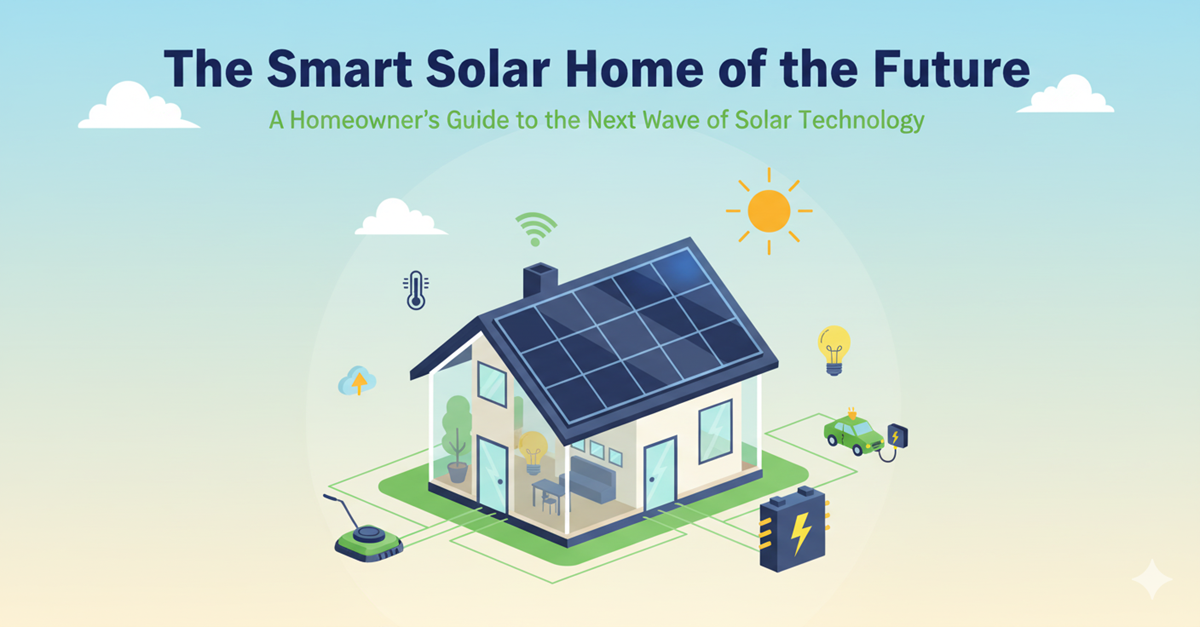
The smart solar home of 2025 has evolved beyond simple panel installations into an intelligent energy ecosystem that actively manages, stores, and optimizes power consumption throughout your property. These advanced systems combine cutting-edge photovoltaic technology with artificial intelligence, advanced battery storage, and seamless home automation integration to deliver unprecedented energy independence and cost savings.[1][2]
For many homeowners, the biggest challenge isn’t a lack of technological options—it’s navigating the overwhelming array of choices and understanding which investments will provide the best long-term value. The solution lies in understanding how today’s smart solar systems are designed to eliminate traditional concerns about efficiency, maintenance, and integration complexity. These systems don’t just generate power—they learn your household patterns, predict energy needs, and automatically optimize performance to maximize both savings and reliability.[2][3][1]
Key Takeaways
- Next-generation panel technologies like perovskite and bifacial systems promise 30%+ higher efficiency and greater energy production from smaller installations
- AI-powered energy management and smart inverters transform solar systems into proactive ecosystems that automatically optimize your home’s energy usage patterns
- Advanced battery storage and Virtual Power Plant programs create new pathways to energy resilience while generating additional income from your solar investment
- Community solar and peer-to-peer trading models are making solar ownership more accessible and profitable beyond traditional purchase options
- Comprehensive recycling programs ensure sustainable end-of-life management while recovering up to 98% of valuable materials from retired panels
Your Guide to Future Solar Terms
Perovskite: A revolutionary solar cell material that can be manufactured using simple printing techniques, promising cheaper production costs and higher efficiency rates than traditional silicon panels.
Bifacial Panel: A double-sided solar panel that captures sunlight from both front and rear surfaces, boosting energy production by 5-30% compared to traditional single-sided panels.
Virtual Power Plant (VPP): A network of home solar batteries and energy systems that work together to support the electrical grid during peak demand, often earning homeowners $500-1,500 annually.
Peer-to-Peer (P2P) Trading: A blockchain-based system that allows homeowners to sell excess solar energy directly to neighbors, creating local energy marketplaces with better returns than traditional net metering.
Smart Inverter: An advanced power conversion device that serves as the communication hub for solar systems, providing monitoring, optimization, and grid-interactive capabilities beyond simple power conversion.
The Evolution of Solar Panels: What’s Next After Silicon?
The solar panel industry stands at a technological inflection point where traditional silicon technology is being enhanced and, in some cases, replaced by revolutionary new materials and designs that promise higher efficiency, lower costs, and greater versatility than ever before.
Next-Generation Perovskite Technology
Perovskite solar cells represent the most significant breakthrough in photovoltaic technology since the development of silicon panels. These revolutionary cells have rapidly evolved from laboratory curiosities to commercial reality, with efficiency rates now exceeding 34% when combined with silicon in tandem configurations. Unlike traditional manufacturing processes that require high-temperature furnaces and complex equipment, perovskite cells can be produced using simple coating techniques like inkjet printing, potentially reducing manufacturing costs by up to 60%.[4][5][6]
The versatility of perovskite materials extends far beyond cost savings. These cells can be manufactured as flexible, lightweight panels suitable for curved surfaces, building-integrated applications, and even portable solar devices. Recent developments have addressed earlier durability concerns, with leading manufacturers now achieving stability ratings that support 25-year warranties comparable to traditional silicon panels.[5][4]
For homeowners, perovskite technology promises higher energy output from smaller installations while maintaining affordability. Companies across multiple countries are now shipping utility-scale perovskite installations, indicating that residential applications will follow soon. The technology’s ability to capture different portions of the solar spectrum compared to silicon makes it particularly effective in varying weather conditions and lower-light environments.[5]
Advanced Bifacial Panel Systems
Bifacial solar panels have emerged from niche applications to mainstream residential solutions, offering 5-30% higher energy production compared to traditional single-sided panels. These innovative panels capture sunlight from both front and rear surfaces, with the back side harvesting reflected light from surrounding surfaces like roofs, driveways, or landscaping.[7][8]
Enhanced Durability and Performance
The dual-glass construction typical of bifacial panels provides superior weather resistance and longevity compared to traditional panels with plastic backsheets. This robust design typically results in extended 30-year warranties versus the industry standard 25 years, making bifacial panels an attractive long-term investment. The panels perform particularly well in snowy climates where ground reflection can boost rear-side energy capture significantly.[8]
Optimized Installation Strategies
Maximizing bifacial panel performance requires strategic positioning and surface planning. Light-colored roofing materials, concrete surfaces, and even carefully positioned reflective ground covers can enhance rear-side energy capture. Professional installers now use modeling software to predict bifacial gains based on site-specific conditions, ensuring homeowners understand the expected performance benefits before installation.[9]
Quantum Dot Solar Innovation
Quantum dot solar cells represent the cutting edge of efficiency research, with recent laboratory achievements reaching 18.1% efficiency and theoretical maximums approaching 66%. These microscopic semiconductor crystals offer unique advantages through their ability to generate multiple electron-hole pairs from single photons, potentially doubling energy conversion efficiency under optimal conditions.[10][11][12]
The engineered nature of quantum dots allows researchers to tune their light absorption properties by adjusting particle size, enabling optimized solar panels for specific environmental conditions and applications. While still primarily in development phases, quantum dot technology shows promise for specialized residential applications where maximum efficiency is critical, such as limited roof space or challenging installation environments.[12]
Transparent Solar Integration
Building-integrated photovoltaics are advancing rapidly with transparent solar cells that maintain 30% transparency while achieving 12.3% efficiency. These panels harvest energy from infrared and ultraviolet portions of sunlight while allowing visible light to pass through largely unimpeded, opening new possibilities for solar integration without aesthetic compromise.[13][14]
For homeowners with architectural restrictions or limited roof space, transparent solar windows represent an additional avenue for energy generation. The technology is particularly promising for new construction where solar integration can be planned from the design phase, potentially incorporating energy generation into every south-facing window while maintaining natural lighting and views.[14]
Creating a Connected Energy Ecosystem: Integrating Solar with Your Smart Home
Modern solar installations function as the central nervous system of smart energy homes, coordinating with household devices and systems to optimize energy usage, reduce costs, and provide seamless backup power during outages.
AI-Powered Predictive Energy Management
Artificial intelligence has transformed solar energy systems from passive generators into proactive energy managers that predict weather patterns, anticipate household energy needs, and automatically optimize consumption to maximize solar utilization. These intelligent systems analyze historical usage data, weather forecasts, and real-time grid conditions to make split-second decisions about energy storage, consumption, and grid interaction.[15][1]
Automated Load Scheduling
Smart energy management systems automatically schedule energy-intensive activities during peak solar production hours, running dishwashers, washing machines, and EV charging when solar generation is abundant. This intelligent load management can reduce grid electricity consumption by up to 25% compared to traditional solar installations. The systems learn household routines and preferences, ensuring that automation enhances rather than disrupts daily life.[16][17][15]
Weather-Responsive Optimization
Advanced AI systems use satellite weather data and local meteorological predictions to anticipate solar production and adjust home energy systems accordingly. Before cloudy periods, the system ensures batteries are fully charged and non-essential loads are pre-heated or pre-cooled to reduce energy needs during low-production periods. This predictive approach maximizes energy independence while minimizing grid dependence.[1]
Smart Inverter Technology and System Monitoring
Smart inverters serve as the communication hub for modern solar systems, providing far more functionality than simple power conversion. These advanced devices include built-in monitoring, safety systems, and grid-interactive capabilities that enable participation in utility demand response programs and virtual power plants.[15]
Real-Time Performance Optimization
Modern smart inverters continuously monitor and adjust system performance, detecting potential issues before they impact energy production. Machine learning algorithms analyze performance patterns to identify maintenance needs, component degradation, or shading issues that might reduce system efficiency. Many systems can automatically contact installers when maintenance is needed, ensuring optimal performance throughout the system’s lifespan.[1]
Mobile App Integration and Control
Comprehensive mobile applications provide homeowners with detailed insights into energy production, consumption, and storage in real-time. These apps allow remote monitoring and control of energy systems, enabling homeowners to adjust settings, schedule loads, and monitor system health from anywhere. Advanced features include energy usage predictions, bill forecasting, and integration with utility time-of-use rates to maximize savings.[18][19]
Seamless Home Automation Integration
Smart solar systems integrate seamlessly with home automation platforms like Google Home, Amazon Alexa, and Apple HomeKit to create comprehensive energy management ecosystems. This integration enables voice control of energy systems and automatic coordination between solar production and household device operation.[19][20]
HVAC and Climate Control Optimization
Smart thermostats communicate directly with solar energy systems to optimize heating and cooling based on real-time solar production. During abundant solar generation, systems can pre-cool homes before peak rate periods or boost heating to store thermal energy. This coordination can reduce HVAC energy costs by 15-30% while maintaining comfort.[21][18]
Electric Vehicle Integration
Solar systems now coordinate intelligently with EV charging stations to prioritize solar energy for vehicle charging while maintaining adequate battery reserves for home energy needs. Advanced bidirectional charging systems can even use electric vehicles as additional home battery storage during extended outages or peak rate periods, creating a truly integrated energy ecosystem.[22][21]
Beyond the Panel: The Latest Trends in Solar Recycling and End-of-Life Management
As the first generation of residential solar installations approaches the end of their 25-year lifespan, the industry has developed comprehensive recycling infrastructure and programs that ensure solar energy remains sustainable throughout its entire lifecycle.
Advanced Material Recovery Technologies
The solar recycling industry has developed sophisticated processes capable of recovering 95% of materials from silicon-based panels and up to 98% from thin-film panels. These advanced recycling facilities use mechanical and chemical separation techniques to extract high-purity silicon, silver, aluminum, copper, and other valuable materials suitable for manufacturing new solar panels.[23][24]
Industry-Leading Recycling Programs
Companies like SOLARCYCLE have processed nearly 500,000 panels and are on track to recycle one million panels by the end of 2025. Their advanced facilities extract materials through partnerships with over 90 energy companies, creating a true circular economy for photovoltaic technology. First Solar has maintained comprehensive recycling programs for over a decade, achieving some of the highest material recovery rates in the industry.[23]
Economic Value of Material Recovery
The recovered materials from solar panel recycling provide significant economic value, with silver recovery alone often exceeding $100 per panel depending on market prices. Silicon recovered from recycling can be purified and reused in new panel manufacturing, reducing the need for energy-intensive virgin silicon production. This material recovery helps offset recycling costs while supporting sustainable manufacturing practices.[23]
Regulatory Framework and State Initiatives
Solar panel disposal is regulated under the Resource Conservation and Recovery Act (RCRA), with many states implementing specific programs to manage end-of-life solar panels. Washington state has established a comprehensive Photovoltaic Module Stewardship and Takeback Program requiring recycling rather than landfill disposal, while California classifies solar panels as universal waste to simplify handling requirements.[25][26]
Manufacturer Take-Back Programs
Leading solar manufacturers are implementing comprehensive take-back programs that provide customers with convenient recycling options at panel end-of-life. These programs typically include prepaid shipping labels and certified recycling services, removing the burden from homeowners while ensuring proper material recovery. Many programs include panel removal services, simplifying the upgrade process when installing newer, more efficient technology.[27]
Environmental Impact and Future Planning
Proper solar panel recycling prevents approximately 78 million tons of accumulated waste by 2050 while recovering valuable materials worth billions of dollars. The recycling industry is projected to grow from $384 million in 2025 to $548 million by 2030, reflecting increasing industry commitment to sustainable practices.[23]
Homeowner Benefits and Responsibilities
For homeowners, participating in recycling programs demonstrates environmental responsibility while often providing cost-effective disposal solutions. Many recycling programs are prepaid by manufacturers or included in original purchase agreements, making end-of-life management seamless for consumers. The availability of comprehensive recycling options helps maintain solar energy’s environmental credentials while supporting continued industry growth.
Energy Resilience: How Solar and Battery Storage Protect You from Grid Outages
Modern solar battery systems have evolved from optional additions to essential components of energy-independent homes, providing seamless backup power while generating additional income through grid services participation.
Comprehensive Backup Power Solutions
Advanced battery storage systems provide silent, emission-free backup power that automatically activates within milliseconds of detecting grid outages. Unlike traditional generators that require fuel and maintenance, modern lithium battery systems operate maintenance-free for 10-15 years while providing clean, reliable power for essential home systems.[28][29]
Selective Load Management
Smart battery systems can prioritize critical loads during outages, ensuring essential systems like refrigeration, medical equipment, heating, and communication devices remain operational. Advanced systems allow homeowners to designate which circuits receive backup power, optimizing battery runtime while maintaining comfort and safety. Many systems can power entire homes for 8-24 hours depending on battery capacity and consumption patterns.[30]
Seamless Grid Integration
Modern battery systems provide uninterrupted power transitions that are imperceptible to sensitive electronics and appliances. This seamless switching protects computers, home automation systems, and other sensitive devices from power disruptions while maintaining internet connectivity and communication capabilities during extended outages.[31]
Financial Optimization Through Time-of-Use Management
Battery storage enables sophisticated energy arbitrage strategies that can generate substantial savings through time-of-use rate optimization. Homeowners can store energy during low-rate periods and use stored power during expensive peak hours, with some reporting annual savings exceeding $1,000 through strategic energy management.[29][22]
Peak Shaving and Demand Management
Smart battery systems automatically reduce peak demand charges by supplementing grid electricity with stored energy during high-consumption periods. This demand management can significantly reduce electricity bills for homeowners on demand-based rate structures while reducing strain on the electrical grid during peak periods.[30]
Virtual Power Plant Participation
Solar battery owners can participate in emerging virtual power plant (VPP) programs that aggregate residential storage systems to provide grid stability services. These programs compensate homeowners for making their battery capacity available during peak demand periods, often generating $500-1,500 annually for active participants.[32][33][34][22]
Grid Services Revenue Streams
Virtual power plants leverage residential battery systems to provide frequency regulation, peak demand reduction, and emergency grid support services more efficiently than traditional power plants. Homeowners participating in these programs contribute to grid stability while earning additional income from their energy storage investments. The programs are expanding rapidly, with over 20,000 customers participating in 16 VPP programs across nine states in 2024.[33][34]
Advanced Battery Technologies and Longevity
Modern lithium iron phosphate (LiFePO4) batteries offer exceptional longevity with over 6,000 charge cycles while maintaining stable performance for 15-20 years. These batteries retain over 80% of their original capacity after a decade of regular use, making battery storage systems increasingly cost-effective long-term investments.[31]
Integration with Electric Vehicle Systems
Advanced battery systems coordinate with electric vehicle charging to optimize energy usage and costs while providing additional storage capacity through bidirectional charging capabilities. Smart charging systems prioritize solar energy for vehicle charging while ensuring adequate battery reserves for home energy needs, creating comprehensive energy ecosystems that maximize efficiency and cost savings.[34][22]
The Future of Solar Ownership: Navigating New Financing and Community Models
The solar ownership landscape is rapidly diversifying beyond traditional purchase and lease models, offering homeowners innovative financing options, community participation programs, and peer-to-peer energy sharing opportunities that make solar energy more accessible and profitable.
Evolution of Solar Financing Models
Solar financing has become increasingly sophisticated with loan products specifically designed for solar installations offering competitive rates and terms that make ownership more attractive than leasing for most homeowners. Modern solar loans often require no down payment while allowing homeowners to capture federal tax credits and build equity in their energy infrastructure.[35][36]
Ownership vs. Leasing Analysis
Current market conditions generally favor solar ownership through purchase or loans rather than leasing arrangements. While solar leases offered attractive no-upfront-cost options when panels were expensive, decreasing panel costs have shifted the economics toward ownership. Leasing may still make sense for homeowners who don’t qualify for tax credits or prefer maintenance-free arrangements, but ownership typically provides superior long-term financial benefits and property value increases.[36][37][35]
Innovative Financing Solutions
New financing models include power purchase agreements (PPAs) with escalating buyout options, solar loans with deferred payments during system payback periods, and property-assessed clean energy (PACE) financing that attaches solar payments to property taxes. These diverse options accommodate different financial situations while making solar accessible to broader homeowner demographics.[38]
Community Solar and Shared Ownership Models
Community solar projects allow multiple households to share benefits from single solar installations, making renewable energy accessible to renters and homeowners with unsuitable roofs. These programs typically serve 100-1,000 households from installations ranging from 500kW to 5MW, with participants receiving monthly bill credits for their share of generated electricity.[39][40][41]
Expanding Access and Equity
Community solar addresses the 42% of households and 44% of businesses that cannot access rooftop solar due to renting, shading, or structural limitations. Community solar project capacity has grown nearly 500% in six years, from 1.5 gigawatts in 2018 to more than 7.8 gigawatts in 2024, demonstrating rapid market acceptance.[40][39]
Subscription and Ownership Models
Community solar programs offer various participation models, from simple subscription services that provide bill credits to ownership stakes that build equity over time. Some programs allow participants to purchase specific panels within larger installations, providing ownership benefits without requiring suitable home sites for individual installations.[41]
Peer-to-Peer Energy Trading Platforms
Blockchain technology enables peer-to-peer energy trading platforms where solar producers sell excess power directly to neighbors, creating local energy marketplaces. These platforms use smart meters and automated trading algorithms to match energy supply with demand in real-time while allowing participants to set preferences for local energy transactions.[42][43][41]
Local Energy Marketplaces
Early implementations like the Brooklyn Microgrid demonstrate that local energy trading can reduce transmission losses, increase grid resilience, and provide better returns for solar producers compared to traditional net metering. Participants typically save 10-15% on electricity costs while supporting local renewable energy development and community resilience.[43][41]
Blockchain Integration and Automation
Advanced peer-to-peer platforms use smart contracts to automate energy trading, ensuring transparent transactions and automatic payments. These systems can track renewable energy certificates and carbon credits, providing additional value streams for solar producers while supporting environmental accounting and sustainability goals.[44]
Solar Cooperatives and Group Purchasing
Neighborhood solar cooperatives represent an emerging model in which residents pool their resources to develop local solar projects, thereby strengthening community bonds. These grassroots initiatives often negotiate better pricing through the collective purchasing power of the group, while providing educational resources and technical support throughout the installation process.[41]
Cooperative Ownership Structures
Solar cooperatives can take various forms, from informal group purchasing arrangements to formal legal structures that own and operate community energy resources. Some cooperatives focus on bulk purchasing of individual rooftop systems, while others develop shared community installations that benefit multiple households through various ownership and benefit-sharing arrangements.[41]
Virtual Power Plant Integration and Revenue Generation
Residential solar and battery systems increasingly participate in virtual power plant programs that aggregate distributed energy resources to provide grid services while generating additional revenue for homeowners. These programs offer compensation for providing grid stability services during peak demand periods or emergency situations.[32][34]
Accelerated Investment Returns
Virtual power plant participation can significantly accelerate payback periods for solar and battery investments through additional revenue streams beyond electricity bill savings. Programs are expanding rapidly as utilities recognize the value of distributed energy resources for grid management, creating new opportunities for homeowners to monetize their solar investments while contributing to grid stability and resilience.[33]
The convergence of advanced solar technology, intelligent energy management, and innovative ownership models is creating unprecedented opportunities for homeowners to achieve energy independence while supporting broader renewable energy adoption. Smart solar homes of 2025 offer compelling benefits through automated optimization, comprehensive backup power, sustainable lifecycle management, and diverse participation models that accommodate different financial situations and property constraints.
For homeowners considering solar investments, the key to success lies in understanding how these integrated systems address traditional concerns about complexity, maintenance, and financial risk through automation and professional support. Whether through cutting-edge perovskite panels, AI-powered energy management, comprehensive recycling programs, resilient battery storage, or innovative community models, the smart solar home represents both an environmental commitment and a sound financial investment in sustainable energy independence.
The technology has matured beyond early adoption phases into reliable, mainstream solutions that provide immediate benefits while positioning homes for decades of clean energy production and cost savings. As these systems become more accessible and affordable, the smart solar home transition from future concept to today’s reality for forward-thinking homeowners ready to embrace the next wave of renewable energy innovation.
Questions to Ask Your Solar Installer in 2025 and Beyond
Armed with knowledge about emerging solar technologies and trends, homeowners can make more informed decisions by asking targeted questions that ensure their investment incorporates the latest advances and future-proofs their energy systems:
- What is your experience with installing bifacial panels, and would they be a good fit for my roof and surrounding environment?
- Does the system you’re proposing include a smart inverter with AI-powered energy management capabilities?
- Is the battery system you offer compatible with Virtual Power Plant (VPP) programs available in my area?
- How does your company handle end-of-life panel recycling, and are take-back programs included in the installation agreement?
- Can the proposed system integrate with my existing smart home devices and automation platforms?
- What financing options do you offer beyond traditional purchase and lease models, including community solar participation?
- How will the system perform during power outages, and what backup power capabilities are included?
- What monitoring and predictive maintenance features are included to ensure optimal long-term performance?
Asking these questions will ensure your solar investment is built for tomorrow, positioning your home at the forefront of the clean energy future.
Related: Understanding Solar Panel Basics
